Monday, 16 May 2016

Task 3 – Cutscene

Unity Environment

Top view


The forest


The mountain base


The forest textured (daytime to better see textures)


The mountain base textured (daytime to better see textures)


The environment consists of two "areas".
The forest area consists of some basic trees (with ivy as their leaves texture, which works quite well), a few rocks, grass floor and some glowing plants providing lighting.
The mountain base area consists of more and larger rocks, rock walls, the start of a mountain with a cave in it and two flares that "mark the nest" and provide lighting.
It is also night time in the scene to create an intimidating and dramatic feel.

Voice-over (pre-edit)


720p or 1080p video produced and uploaded


(My voice is quiet because it was late when I recorded the voice-over)

Friday, 13 May 2016

Task 2 – Script and Narrative Development

Map of the setting/environment in your story (Sketched/Illustrator)

Created in illustrator


Script (Containing narrative from your story you created)

Start cut-scene
*walking through forest*
Player: So many trees... Am I there yet? These glowing plants are cool though...
*walking*
Player: The mountain base! I see the light from the flares so the nest must be there...
*growling nearby*
Player: I think they heard me...Well, here goes nothing!
End cut-scene

Storyboard


Not a complex cut-scene, but it works.

Task 1 – Game Story Development

Story
The story is about a young hunter (the player) who has dreams of climbing the ranks of the hunters, being capable of taking on increasingly dangerous missions in order to protect the people, and maybe even earn a good amount income too...
In this, his first mission, he is searching for a nest of monsters that needs to be destroyed in order to protect a nearby town, determinedly pushing on despite being earlier separated from his team (or abandoned by them for being such a novice, who knows).
To do this he must pass through a Forest in order to reach the base of a mountain were the nest is located.
Unfortunately he has never actually seen any of the monsters, only having seeing illustrated depictions of them and the destruction they can leave, meaning he does not quite know what he's up against.

Setting (What is the environment? What does it look like? What relevance does it have to your setting).
Forest: Filled with lots of trees and brush (bushes, plants, grass, etc), a few rocks, it's slightly misty, dark, there are the occasional puddles and a few monsters.
Mountain base: There are no trees, lots more/bigger rocks, the monster nest is located here, caves and many more monsters are to be expected.

Backstory
The world is over run by monsters, the bigger cities are safe behind their walls, but the smaller villages and towns can disappear overnight without adequate protection. Thus it is up to the hunters to protect the vulnerable villages and towns as well as to seek out the more troublesome groups or individuals to hunt.
Due to the dangers of these monsters, the world is largely untouched outside of the walls, with expansion typically being punished by attack and ground based transport like trains under constant threat, there are a great number of lush forests, meadows and other parts of nature such as wild animals. This abundance of life gives adequate resources and concealment for the towns and villages to sustain themselves, but this also makes navigation tricky and helps to hide the monsters too.


Characters (Including Antagonist, Protagonist, Sidekick, Player Character etc).
Protagonist: A hunter called David: a well built, young male, with black hair, brown eyes and he wields an axe and shield. Could also be called Average Alan due to appearance.
Antagonists: The monsters: 8 ft tall creatures that look like they are straight out of nightmares, they look like twisted versions of animals like wolves and bears, they have pitch black fur with red and white features, tend to have bone like Armour plating and/or spikes.

There are no sidekicks or other characters (in this scene), The player character is the Protagonist.

Character Backstories
Dave is new to the hunting profession with this being his first assignment, but it can't be that hard, they are just some ticked off animals right?
Dave grew up in a small nameless town not far from one of the cities, his job was to carry trade goods to and from the city and the town. While getting some supplies from there, he returned to find his town destroyed with no survivors.
He quickly returned to the city with news of the town's destruction, started combat school (possible tutorial level) and vowed to become a hunter and to protect others from the same fate.

Monday, 18 April 2016

Task 5 – Interactive Story and Writing Strategies.

Cinematics (Trailer)
The cinematics allow for a look into the game's story and what it is about in order to get people more intrigued and wanting more of it without (hopefully) giving way too many spoilers about the story.
With cinematics, the game's animators get to flex their metaphorical animating muscles, making the cinematics look incredible, sometimes looking like they were produced by a professional animated movie company (like over-watch's cinematics looking like Disney might have done them.).
Some teaser cinematics are very short to do just what the title says: tease the watcher into wanting more info. There are also longer cinematics that reveal more of the story as kind of mini movies.


Cut scene
The cut-scenes allow to show the story in a more detailed form than through the game-play by allowing things like, better camera angles, fluid (but scripted) movement and not letting the player screw it up (like shooting at important characters, looking the wrong way, wandering off etc) by taking away control temporarily.
Sometimes it is necessary to limit the players freedom so they at-least know what is happening in the game.
http://s1.dmcdn.net/TrxSO/1280x720-v7Q.jpg


Triggered Event
The triggered Events allow for the adding of some extra drama during the game-play (unlike cut-scenes that interrupt game-play) by activating these events by reaching certain points/doing certain actions, such as a building falling over (example below), a helicopter crashing, a giant enemy appearing or some other scripted event.
My favorite triggered events are battlefield's levolutions, which change how the maps look/play
https://i.ytimg.com/vi/5eyW2FR0ziI/maxresdefault.jpg


Player Control (How player control has helped story telling)

The player Control is the main method for moving the player through the story (and through the levels), by having them fighting the enemies, saving the friends and saving the world themselves, which helps in improving the experience by letting them experience it as the character does.
It is one thing to watch the character own the enemy in a cut-scene, but it feels much more personal and impressive when you are the one doing it yourself.
http://guides.gamepressure.com/crysis/gfx/word/1627987796.jpg


Character Customisation

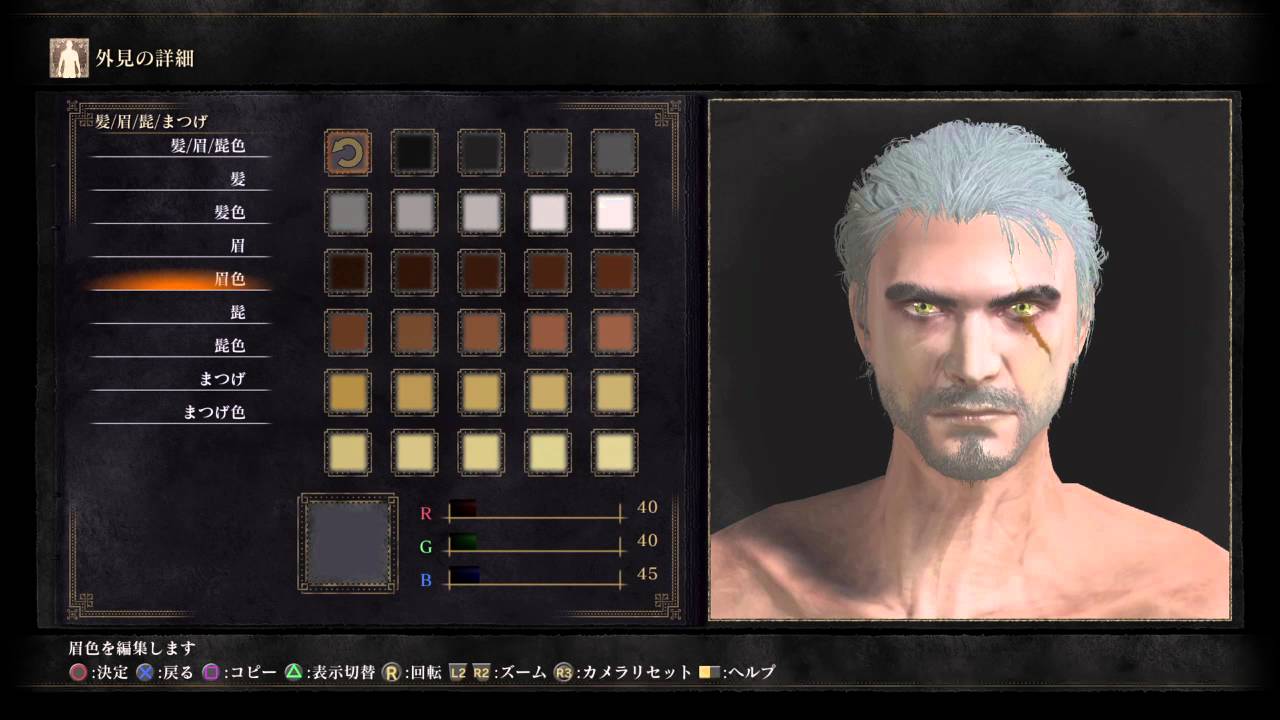
Character customisation allows you to make the character truly yours, by choosing their appearance and sometimes their behaviour.
This helps to create more immersion as you see the character that you yourself made, in the game.
https://i.ytimg.com/vi/LMm45SMpj1Q/maxresdefault.jpg

Task 4 – Emotion.

Happiness
An example of happiness in a character is Mario from the Mario games as he spends most of his time during his adventures in a rather joyful mood, that can be heard as he jumps around saying "wahoo!". He is surprisingly jolly for someone who's friend was kidnapped by a giant fire-breathing turtle.
https://upload.wikimedia.org/wikipedia/en/9/99/MarioSMBW.png


Vengeance
An example of vengeance in a character is Kratos from God Of War as he wants revenge for being kicked out of Olympus by the other gods. This is very evident due to the excessive snarling, growling, yelling and brutal dismantling of his enemies.
http://necaonline.com/wp-content/uploads/2015/09/1300x-Kratos4.jpg


Fear
An example of fear in a character is Laura Croft from (the rebooted) Tomb Raider as she reacts to killing her first person by crying. This is one of the most believable parts of the tomb raiders, unlike the time she found a living dinosaur in an ancient temple, then killed it and destroyed the temple.
http://cdn.gamer-network.net/2014/usgamer/Tomb-Raider-DE-Screenshot-03.jpg


Anger
An example of anger in a character is Hulk from the Hulk games as he is almost permanently angry (with occasional moments of sadness). This is quite obvious since being angry is what turns him from a skinny nerd into a big green ball of muscly rage.
https://upload.wikimedia.org/wikipedia/en/e/ed/The_Incredible_Hulk_(2008)_Coverart.png


Perseverance
An example of perseverance in a character is the (player's) Undead from the Souls series (demon souls, dark souls, blood-born) as they just keep on going no matter how many times they get put down. A destiny awaits you, so you cannot just give up (although taking some breaks in order to vent rage every now and again are recommended).
http://sheattack.com/myblog/wp-content/uploads/2015/01/darksouls.jpg


Heroism
An example of heroism in a character is Doom-guy (He has no real name) from DOOM as he fights all the forces of hell all on his own, without saying a single word. A true bad-ass who kick-started the shooter franchise (although he spent the early part of his career unable to figure out how to look up and down). (fun bonus fact: The first doom was technically a 2D top down shooter, look it up.)
http://static3.gamespot.com/uploads/original/280/2802776/2884163-unwilling_caco_1434321998.jpg


Valour
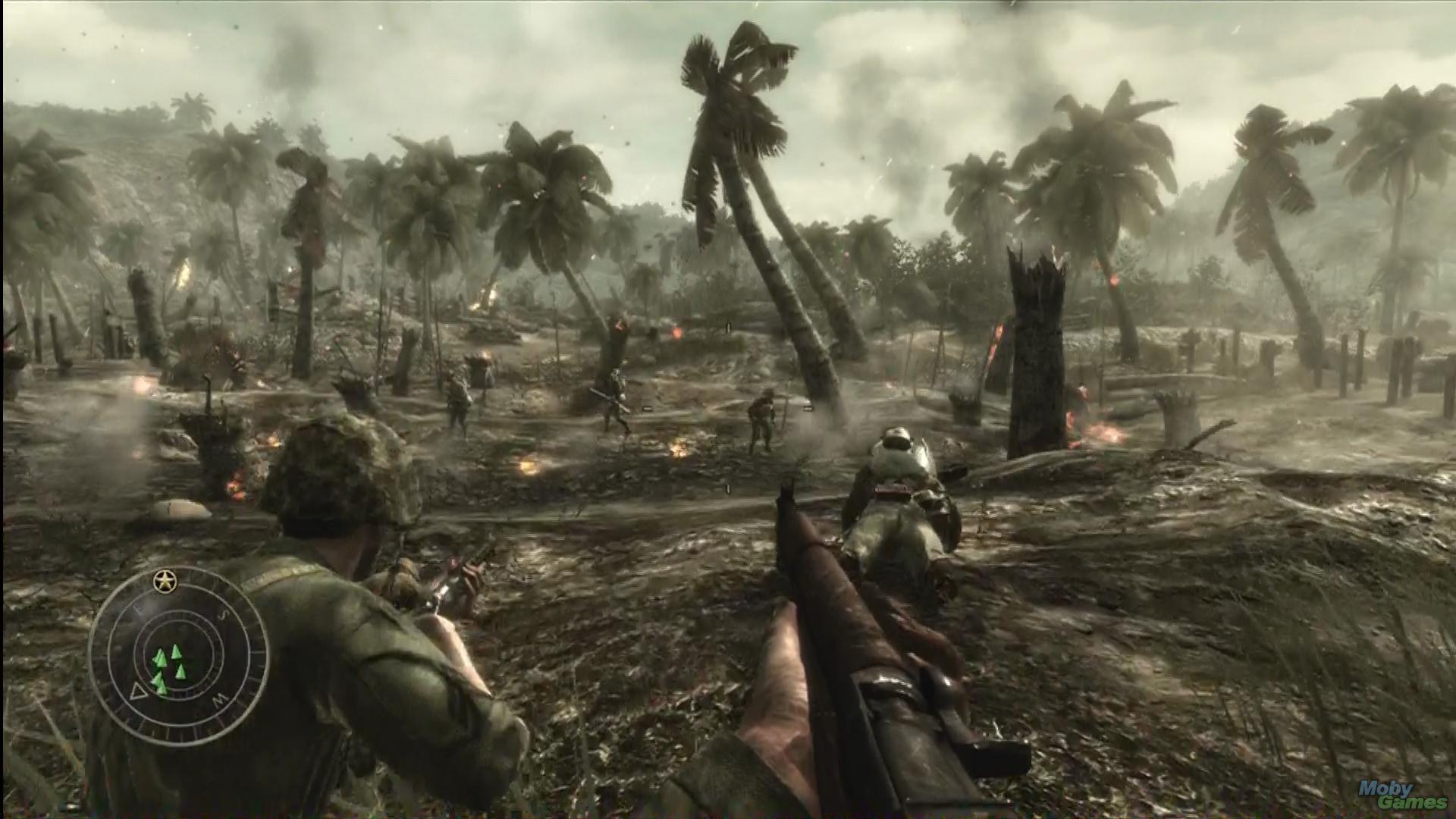
An example of valour in a character is Pvt. C. Miller from Call of Duty: World at War as he bravely fights against the Japanese in the pacific. He fights on through bunkers and jungles, ambushes and assaults, all for the sake of his country.
http://eskipaper.com/images/call-of-duty-world-at-war-4.jpg


Hope
An example of hope in a character is Joel from the last of us as he hopes for safety for him and Ellie in the dangerous world they are in. In a world as dangerous as that one, hope is very important, almost as important as hoping Ellie's AI doesn't bug out agai-Ellie get away from the clicker!
http://b-i.forbesimg.com/erikkain/files/2013/06/Joel-and-Ellie-looking.png


Competitiveness
An example of competitiveness in a character is Falco Lombardi from the Star-fox series as he is a hotshot pilot who always enjoys a challenge. He is constantly competing for who can shoot down the most enemies. He can also be a tad overbearing at times though.
http://en.wikifur.com/w/images/6/60/Falco.jpg

Task 3 – Representation

Stereotypes

Some games use stereotypes as bases (or in their entirety) for their characters, a strong example of this is in Team Fortress 2 where every character in the game is some form of stereotype:

The cowboy Texan engineer
The charismatic French spy
The large Russian heavy
The loud-mouthed Boston scout
The drunken Scottish Demoman
The outback Australian sniper
The mad German doctor
The patriotic Midwestern-USA Soldier
The masked psycho pyro


This helps to add some humor and variety to the different characters.


Characterizations

Characterization is very important as a strongly written, interesting and believable character can really help with a game's story. Characterization is everything about characters including, background, personality, stereotypes, behavior, their speech and possibly their development throughout the game.

An example of this is Michael De Santa from GTA V. He's an ex-criminal trying to turn things around for the sake of his family.
http://cdn.staticneo.com/w/gta5/thumb/f/f3/Michael.png/280px-Michael.png


Genders

Genders in video games tends to be a touchy subject, with people complaining about how females are shown "unrealistically" in video-games, and while sometimes right, they tend to ignore the fact that a large amount of male characters look like a refrigerator on legs due to all their muscles, which isn't very realistic either.
But despite the controversy, genders are an important part of characterization whether it is the stereotypical muscly males and the female damsel in distress, or a strong female character  and a less musclebound male.
http://thenerdstash.com/wp-content/uploads/2016/02/is-mirror-s-edge-2-catalyst-an-open-world-game-like-dying-light-mirror-s-edge-2-456565.jpg

Task 2 – Storytelling within Genre’s

First Person Shooter (FPS)
The stories in FPS's are usually delivered by the characters talking directly to the player/player's character, with you experiencing the cut-scenes in first person (e.g. Call of Duty).
The first person perspective makes this much more personal and gets the player involved as they see the game's story from the character's eyes.
http://www.mobygames.com/images/shots/l/405400-call-of-duty-world-at-war-xbox-360-screenshot-getting-our.jpg


Third Person Shooter (TPS)
The stories in TPS's are usually delivered by characters conversing with each other, with you watching the characters during cut-scenes (e.g. Gears of War).
While not as personal as first person, third person allows you to watch your character, allowing them to have much more of a unique personality.
https://i.ytimg.com/vi/v94GuyrL5aw/maxresdefault.jpg


Role-playing Game (RPG)
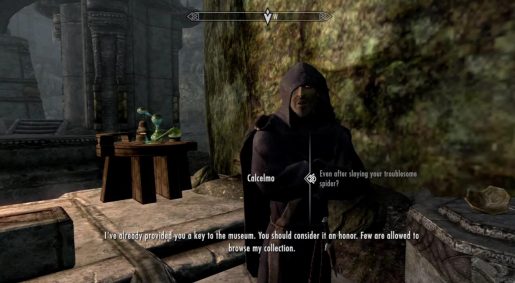
The stories in RPGs are usually delivered through conversing with the variety of characters, with any actions you take potentially altering the course the entire story will take. They also sometimes have lore scattered around (like the Elder-scrolls series).
Due to the fact that your choices can alter the story of RPGs, it makes the whole experience much more interactive, allowing you to tweak the story to how you want it to be.
http://www.justpushstart.com/wp-content/uploads/2012/01/Skyrim-Hard-Answers-Calcelmo-515x283.jpg


(the genres from this point on tend to be lighter on the story than those above)

Fighting
The stories in fighting games are usually either some kind of tournament (like Dead or Alive) or some bad-guys have killed/kidnapped someone/done something else bad and the protagonist is out for revenge/to rescue the kidnapped person/stop them (Like the Teenage Mutant Ninja Turtle games).
https://lh3.googleusercontent.com/Vqv16YTRTi_W0dmQZ_gp5cby-khq00Lbv3IBGRE4wjaANAPkQCFlOknUrvnGHLk6krI=h900


Sport
The stories in sport games are usually a newbie wanting to climb the ranks and become the best or a retired pro getting back into it. Or just a person scoring points (like the tony hawk games).
https://digitalbogie.files.wordpress.com/2013/10/tony-hawks-pro-skater-2-screenshot-2.jpg


Strategy
The stories in strategy games are usually told by some high ranking military members talking about the missions and what is going on (like the C&C games). 
This sometimes has the effect of making you feel like one of those high ranking military members by having the characters talk to you and give you orders.
http://paulthetall.com/wp-content/uploads/2013/09/Red-Alert-screenshot1.jpg


Simulation
There are rarely any stories for simulation games beyond what your job is such as train driver, pilot, farmer, mayor, etc. (like the Sim City games).
Occasionally with certain simulation games (like the sims) you can make up your own story and get creative with it.
http://i.kinja-img.com/gawker-media/image/upload/wv2ovw2gbwqcqulm0xdo.jpg